Table of Contents
- Quick Answer
- Why Does a Hard Drive Start Clicking?
- Common Warning Signs Before Complete Hard Drive Failure
- What to Do Immediately When a Hard Drive Starts Clicking
- Can Data Still Be Recovered from a Clicking Hard Drive?
- What Causes Hard Drives to Fail?
- How Professional Hard Drive Recovery Works
- How to Reduce the Risk of Future Data Loss
- Conclusion
- Need Professional Help Recovering a Failing Hard Drive?
- Frequently Asked Questions
Your hard drive starts making a strange clicking noise… files begin loading slowly… and suddenly your computer stops recognizing the drive. At that moment, most people panic and unfortunately, many make mistakes that turn a recoverable problem into permanent data loss. A clicking hard drive is one of the most common warning signs of serious drive failure. In many cases, the data can still be saved, but the first few actions you take can directly affect the chances of successful hard drive recovery.
In this guide, we’ll explain:
Why hard drives start clicking
The warning signs you should never ignore
What to do immediately
What NOT to do
And when it’s time to seek professional help
Quick Answer
If your hard drive is clicking or showing warning signs, stop using it immediately. Continued use can worsen internal damage and reduce the chances of successful hard drive recovery. Avoid DIY fixes, repeated restarts, or random recovery software until the issue is properly diagnosed.
Why Does a Hard Drive Start Clicking?
A clicking sound usually means the internal components of the drive are struggling to function properly.
Traditional hard drives contain moving mechanical parts, including:
Read/write heads
Spinning platters
Motors and actuators
When one of these components fails or becomes unstable, the drive may produce repetitive clicking noises, often referred to as the “click of death.”
In professional hard drive recovery cases, clicking noises are commonly linked to:
Head crashes
Mechanical wear
Firmware corruption
Power damage
Physical shock or drops
Common Warning Signs Before Complete Hard Drive Failure
A clicking hard drive noise is not the only red flag. Many failing drives show warning signs before they completely stop working.
1. Slow File Access
Files take unusually long to open or transfer.
2. Frequent Freezing or Crashing
Your operating system becomes unstable or unresponsive.
3. Drive Not Detected
The system intermittently fails to recognize the drive.
4. Corrupted Files or Error Messages
You may see messages asking you to format the drive or repair corrupted files.
5. Unusual Noises
Clicking, grinding, buzzing, or beeping sounds should never be ignored.
If you notice any of these symptoms, immediate action is important to improve the chances of successful hard drive recovery.
What to Do Immediately When a Hard Drive Starts Clicking
This is the most important part.
1. Stop Using the Drive Immediately
The longer a failing drive runs, the worse the internal damage can become.
Every attempt to:
Restart the system
Open files
Copy data
Run scans
can place additional stress on damaged components.
This is one of the biggest reasons many hard drive recovery attempts fail.
2. Disconnect the Drive Safely
If possible:
Power down the computer
Disconnect the drive carefully
Avoid reconnecting it repeatedly
Repeated spin-up attempts can worsen mechanical damage.
3. Do NOT Run Random Recovery Software
This is a very common mistake.
Many users install free recovery tools immediately after hearing a clicking hard drive issue. The problem is that software recovery tools are designed mainly for logical issues, not physical damage.
If the drive has a mechanical failure, software scans can:
Overwork the drive
Cause additional platter damage
Reduce hard drive recovery success rates
4. Avoid Opening the Drive Yourself
Hard drives are extremely sensitive internally.
Even tiny dust particles can damage platters permanently once the drive is opened outside a controlled environment.
Professional hard drive recovery services use Class 100 cleanrooms specifically designed for handling damaged drives safely.
5. Check If You Have a Backup
If your backup is current, avoid risking the damaged drive unnecessarily.
However, many users discover backup issues only after a failure happens:
Missing files
Outdated backups
Corrupted backup drives
This is why proper backup verification matters just as much as creating backups.
Can Data Still Be Recovered from a Clicking Hard Drive?
Yes, in many situations, data is still recoverable.
A clicking hard drive does not automatically mean your files are gone forever. In professional hard drive recovery environments, damaged components can sometimes be repaired temporarily to extract data safely.
Recovery success depends on:
Severity of damage
How quickly will you stop using the drive
Whether DIY attempts were made
The condition of the platters
Drives that have not been opened or heavily stressed usually have better recovery outcomes.
What Causes Hard Drives to Fail?
Hard drive failure can happen for many reasons, including:
Mechanical Wear
Moving components naturally wear down over time.
Overheating
Poor ventilation and excessive heat reduce drive lifespan.
Physical Damage
Drops, bumps, or sudden movement during operation can damage internal parts.
Electrical Problems
Power surges and faulty adapters can damage drive electronics.
Aging Drives
Most traditional hard drives become increasingly vulnerable after several years of regular use.
Understanding these causes can help reduce future risks and improve long-term storage reliability.
How Professional Hard Drive Recovery Works
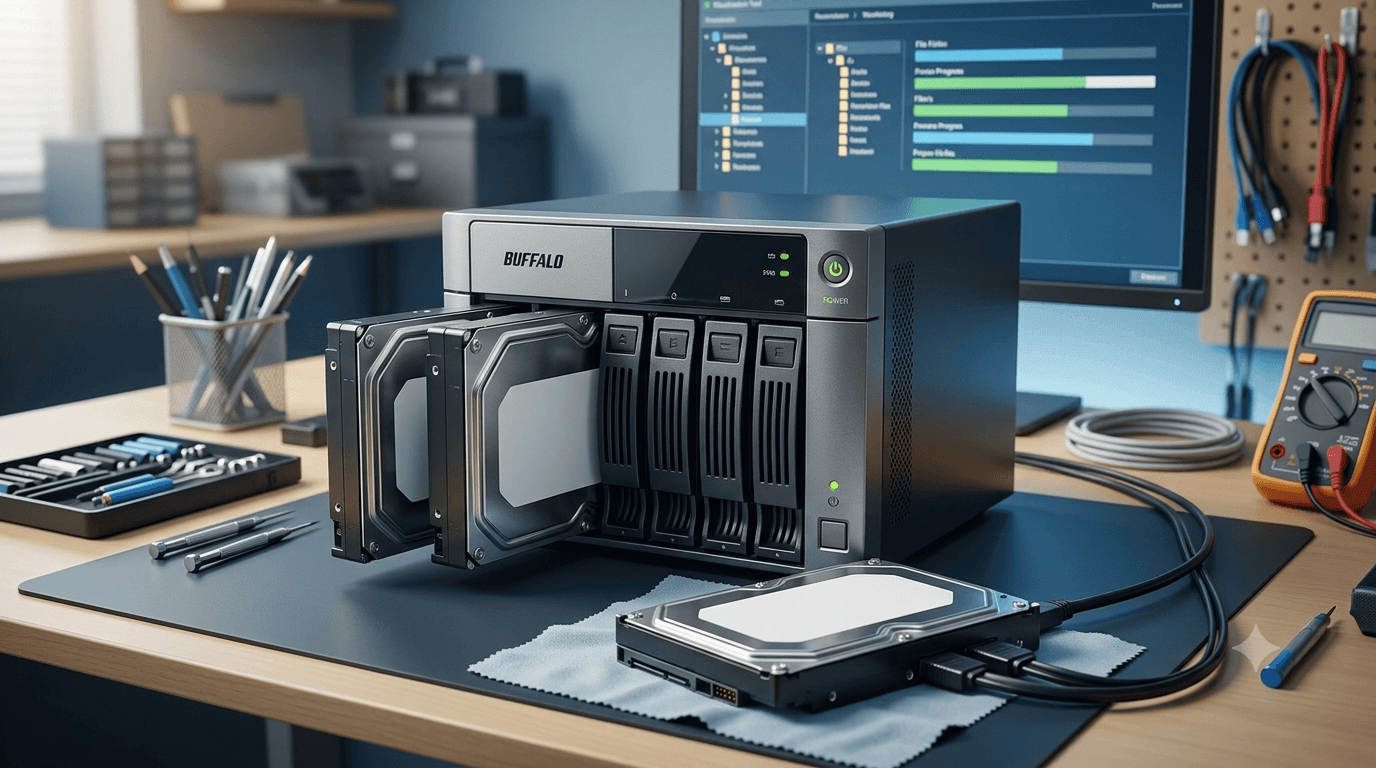
Professional hard drive recovery is a controlled technical process designed to minimize additional damage while extracting recoverable data.
Depending on the issue, recovery may involve:
Firmware repair
PCB replacement
Head assembly replacement
Cleanroom component repair
Sector-by-sector cloning
File system reconstruction
At facilities like Disk Doctors, recovery procedures are performed using specialized tools and controlled environments to safely handle damaged drives.
How to Reduce the Risk of Future Data Loss
While no drive lasts forever, these habits can significantly reduce the risk of serious data loss:
Maintain multiple backups
Replace aging drives proactively
Use surge protectors
Avoid moving drives while active
Monitor drive health regularly
Keep systems properly cooled
Most importantly, never ignore unusual drive behavior.
Small warning signs often become major failures later.
Conclusion
A clicking hard drive is never something to ignore.
In many cases, the data is still recoverable but acting quickly and avoiding common mistakes makes a huge difference.
The safest approach is simple:
Stop using the drive
Avoid DIY fixes
Prevent further stress or damage
Seek professional evaluation if the data is important
The sooner the issue is handled correctly, the better the chances of successful hard drive recovery.
Need Professional Help Recovering a Failing Hard Drive?
If your drive is clicking, not being detected, or showing signs of failure, a professional evaluation may help prevent permanent loss.
Disk Doctors provides:
Advanced hard drive recovery solutions
Secure and confidential handling
No hidden fees / No data, no charge
Fast turnaround for urgent recovery cases
Submit your case for a free evaluation and find out if your data can still be recovered.
Frequently Asked Questions
1. Is a clicking hard drive always failing?
Usually yes. Clicking sounds often indicate mechanical or internal hardware issues.
2. Can a clicking hard drive still work temporarily?
Sometimes, but continued use can worsen the damage significantly.
3. Should I freeze a clicking hard drive?
No. This outdated myth can create condensation damage and reduce recovery chances.
4. Can recovery software fix a clicking hard drive?
Software tools are rarely effective for physical drive failures.
5. How long does hard drive recovery take?
Recovery time depends on the severity of the damage and complexity of the case.